
HIP-4: Outcome Contracts

HIP-4 is not just another feature update, it is a deliberate expansion of what Hyperliquid is capable of becoming. In this article, we explore what HIP-4 is, how it differs from existing solutions, how it will benefit $HYPE, and what opportunities it creates.
1. Why HIP-4?
HIP-4 stands for Hyperliquid Improvement Proposal, and as the name suggests, it is the fourth such proposal. The previous ones were:
- HIP-1: Native token standard
- HIP-2: Hyperliquidity
- HIP-3: Builder-deployed perpetuals
- HIP-4: Outcome contracts
2. What is it, concretely?
Outcome contracts are fully collateralized contracts that settle between 0 and 1, designed primarily for prediction markets and binary options.
When it comes to prediction markets, the possibilities are virtually endless, whether in the cryptocurrency space or beyond. For example, you could bet on the next U.S. president: you could buy a "Yes" on Hypurr for president at 0.45. If Hypurr wins the election, your "Yes" becomes 1 and the "No" becomes 0. A $45 position bought at 0.45 would yield $100 once the result is known.
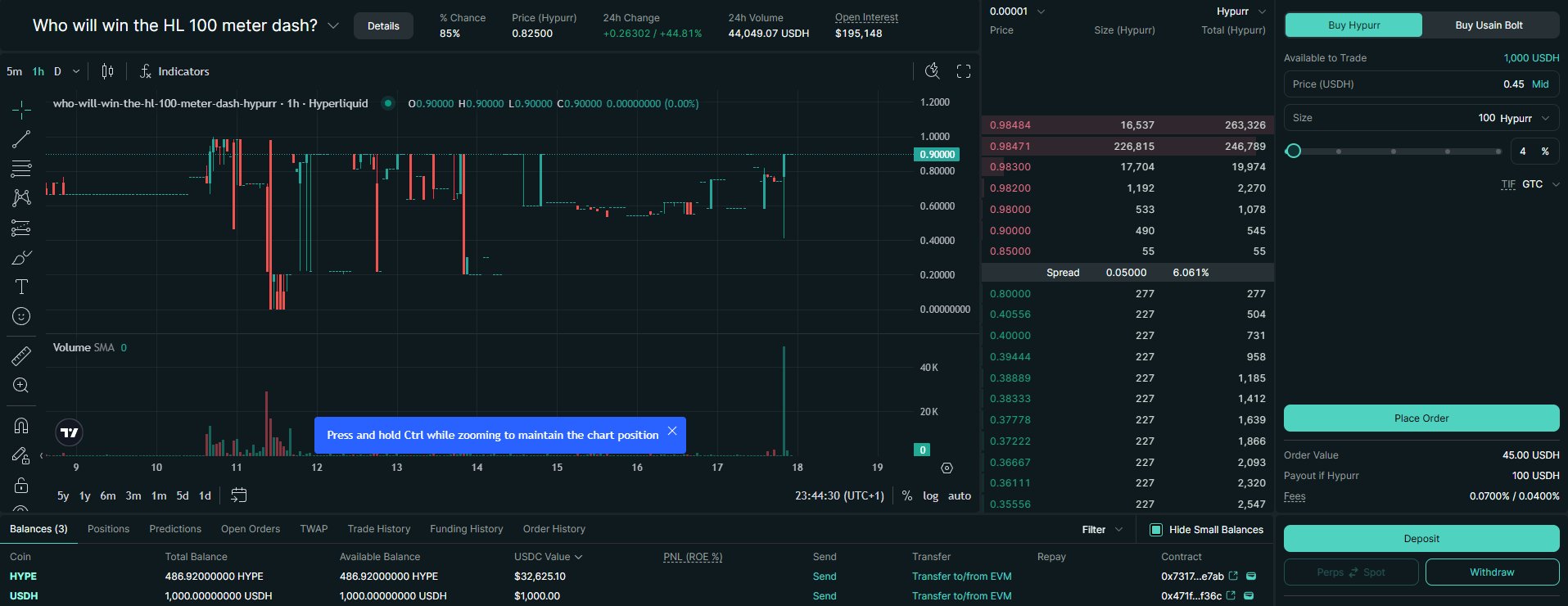
The range of possible markets is vast: will the price of $HYPE exceed $42.32 in the next 5 minutes? Will a certain team win the championship? What will the Fed decide at its next meeting? How many tweets will Elon Musk post today? Temperature thresholds in a given country, ceasefire agreements during conflicts, TGE dates, or valuations - the only real limit is the existence of a verifiable outcome.
3. The Competition
You've likely heard of the two largest prediction market platforms: Polymarket and Kalshi. An interesting side note: Jeff Yan actually attempted to launch a prediction market called "Deaux" back in 2018, before the concept had any traction. In 2026, he is finally bringing that vision to life through Hyperliquid.
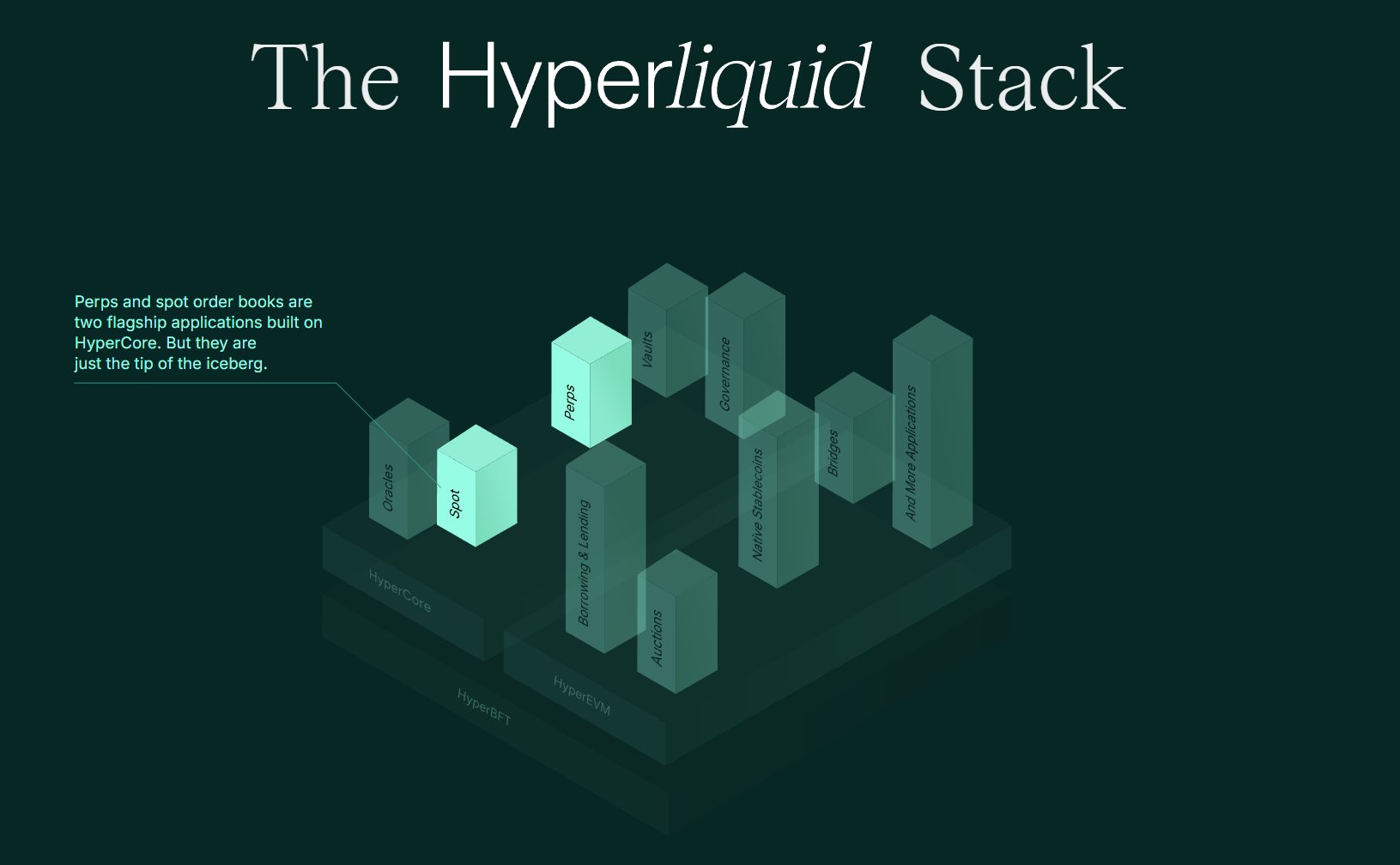
What sets Outcome apart from Polymarket is primarily liquidity. On HyperCore, all your liquidity lives in one place: spot trading, perpetuals, and Outcome contracts share the same account and margin. On Polymarket, you have to bridge funds to Polygon and work within a siloed environment, while the team works on launching their own blockchain and governance token.
Polymarket's resolution mechanism for markets without a predefined oracle relies on a whitelisted set of addresses to verify outcomes. This system has proven unreliable, with multiple cases of manipulation and unresolved disputes. On Hyperliquid, external-data Outcome markets will be verified by deploying teams who must post large amounts of $HYPE as collateral. In the event of a dispute, the staked HYPE is slashed following a validator vote and then burned, creating strong alignment between deployers and users.
As for Kalshi, it is fully centralized. There is simply no comparison to be made. One of Hyperliquid's key advantages is that users and high-frequency algorithms can simultaneously hold perpetual or spot positions and Outcome positions, all within the same account.
Hyperliquid is well-positioned to dominate this space thanks to its network effects and liquidity depth. It already benefits from arguably the strongest and most loyal community in crypto, built on the values the team has consistently demonstrated. Arbitrage opportunities will naturally emerge between perpetuals and Outcome contracts, as well as between Hyperliquid and competitors like Kalshi and Polymarket. Fee structures for Outcome are already known and will mirror the HyperCore spot model, with the standard discounts tied to staking or 14-day volume. These fees are significantly lower than Polymarket's, which can reach up to 1.56% on crypto prediction markets.
4. The Impact on $HYPE
This is unambiguously positive for $HYPE. As is customary for the team, 100% of fees generated are expected to flow into the Assistance Fund. But the direct fee revenue is only part of the story. Arbitrage activity between Outcome contracts, perpetuals, and spot markets will drive additional volume, and prediction markets have a track record of attracting users who have never engaged with crypto before. Outcome could meaningfully expand Hyperliquid's user base. Builder-integrated apps will likely be able to incorporate Outcome markets as well, generating further revenue across the ecosystem.
On deployers: Outcome markets will be permissionless, and based on the HIP-3 precedent, it is reasonable to expect the required staking threshold to be significant, likely around 500,000 HYPE. We already know of two teams preparing to launch: outcome.xyz, which has already secured its 500k HYPE, and the team behind unit.xyz and trade.xyz, whose founder Shoku tweeted balloon emojis the same day HIP-4 was announced, a fairly clear signal they're gearing up for sports markets.

Every new deployer entering the space creates additional buy pressure on HYPE.
5. The Opportunities
The opportunity set around Outcome is substantial. Expect arbitrage windows, especially in the early days, as well as openings for high-frequency strategies. Some in the community are already speculating about potential airdrops, both from Hyperliquid itself and from deployers. For those with domain expertise in specific areas, Outcome markets could also serve as a hedging tool.
Conclusion
HIP-4 is not just another feature update. It is a deliberate expansion of what Hyperliquid is capable of becoming. No liquidation risk, no continuous oracle, no funding rate: just clean binary settlement with shared liquidity across Hyperliquid. The competitive moat is real. No existing prediction market platform offers this level of composability, and none can match Hyperliquid's existing community, liquidity depth, and fee structure.
For $HYPE holders, the flywheel is straightforward: more markets mean more volume, more volume means more fees, more fees mean more buybacks. And crucially, prediction markets attract a demographic that perpetuals never will, people who want to bet on the world, not just on price charts.
Testnet is live, mainnet is on the horizon, and the first deployers are already positioning. Whether you are a trader looking for arbitrage, a builder eyeing a new market vertical, or simply someone who wants to understand where decentralized finance is heading: HIP-4 deserves your attention.